Who We Are
We work to achieve a positive public image and a diversified economic base with viable employment opportunities to improve and enhance the local economy.
The AHEDC was formed on July 1, 2002 and works in partnership the local business community and with Alleghany County, Covington City and the towns of Clifton Forge and Iron Gate. Portions of the region also are marketed by the Roanoke Regional Partnership. We are located at Dabney S. Lancaster Community College in Clifton Forge.
We concentrate on five distinct focus areas for development, and work with local governments and other local organizations on:
- Marketing and Business/Industry Recruitment
- Business/Industry Retention and Expansion
- Small Business and Entrepreneurial Development
- Travel and Tourism
- Workforce to Development
Our Vision

The Alleghany Highlands will offer a flexible business environment that can sustain a variety of industries and businesses. Bringing together the combined resources of area businesses and local government –along with regional and state organizations – the Alleghany Highlands Economic Development Corporation will work to improve current and future economic conditions within the Alleghany Highlands. A diverse and trained workforce; ready and available commercial properties; conveniently located and modern industrial areas; low operating costs, and a friendly community all are available in the Alleghany Highlands. Local and State incentives, including the Alleghany Highlands Enterprise Zone, are available to existing and new Alleghany Highlands businesses and industries.
Board of Directors
| Mark George, Chair Business Representative Vice President, MeadWestvaco Corporation |
Lewis “Butch” Kemper, Vice Chair Business Representative President, Dawn Warehousing, Inc. |
| Kathy Bryant, Treasurer Business Representative Branch Manager, Highlands Community Bank |
Suzanne Adcock Government Representative Alleghany County Board of Supervisors |
| Horton Beirne Business Representative Editor & Publisher, The Virginian Review |
Carl Brinkley Government Representative Clifton Forge Town Council |
| Jim Garcia Business Representative Owner, Standard Printing |
Roy Hall Labor Representative United Steel Workers International Union |
| Teresa Hammond Chamber of Commerce Representative Executive Director, Alleghany Highlands Chamber of Commerce and Tourism |
Ray Lipes Business Representative Area Manager, Lumos Networks |
| Greg Madsen Business Representative CEO, LewisGale Hospital at Alleghany |
Cletus Nicely Government Representative Alleghany County Board of Supervisors |
| Tammy Scruggs Arts Representative Executive Director, Alleghany Highlands Arts Council |
Dr. Richard Teaff Education Representative President, Dabney S. Lancaster Community College |
| Kim Warlitner Government Representative Covington City Council |
Alan Williams Government Representative Mayor, Town of Iron Gate |
| David Woods Business Representative General Manager, Bacova Guild |
Bill Zimmerman Government Representative Covington City Council |
Ex Officio Members
| Darlene Burcham, Town Manager, Clifton Forge | Bill Ed Cannon, City Manager, Covington |
| John Strutner, Administrator, Alleghany County | |
Staff
| David L. Kleppinger, Executive Director dave@ahedc.com |
Herb Slaydon, Entrepreneur Specialist herb@ahedc.com |
| Terri Kristoff, Administrative Assistant terri@ahedc.com |
|
A Little Bit about the Alleghany Highlands
Alleghany Highlands – made up of Alleghany County, Covington City and the towns of Clifton Forge and Iron Gate – is located in the western portion of Virginia and has a land area of 445.66 square miles. The word “Alleghany” is an American Indian word meaning “endless,” and it is used to describe the mountain ranges of the Appalachians. Opportunity for better business and personal living are also “endless” in the Alleghany Highlands.

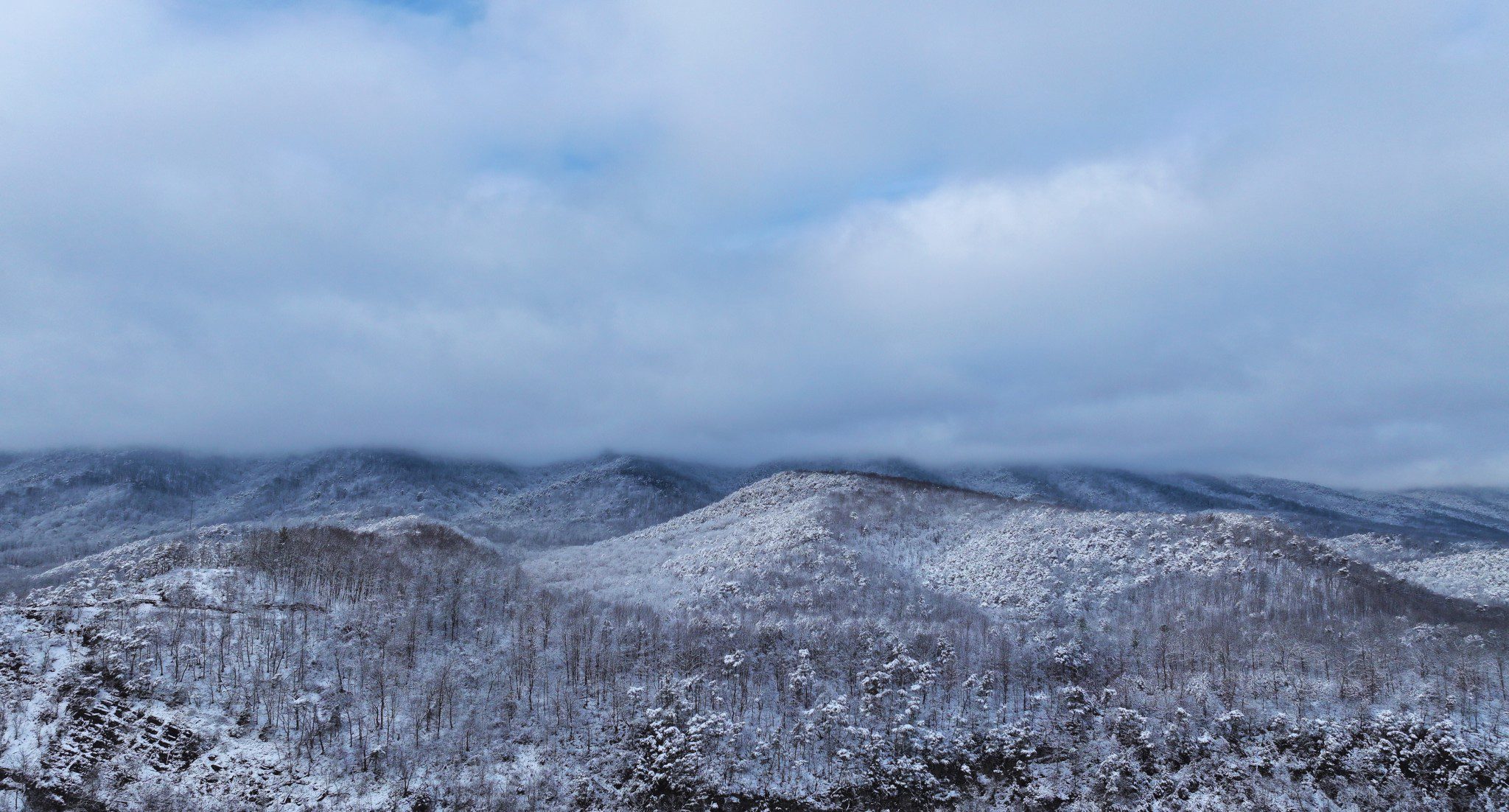
The Alleghany Highlands were first settled around 1746. On January 5, 1822, Alleghany County was formed from parts of Bath, Botetourt, and Monroe (now a part of West Virginia) counties by an act of the Virginia Legislature. The region is rural in nature, with mountains and valleys. The highest point in Alleghany County is Big Knob (4,049 feet) on Warm Springs Mountain, while the lowest point is the Town of Iron Gate (1,000 feet).
Throughout the 17th century, the Valley of Virginia was an unknown entity to all Europeans with the exception of a few traders and explorers. It was predominantly during the second quarter of the eighteenth century, after the earliest westward explorations, that the first European settlers began to move into the Valley of Virginia in any great numbers. The first European immigrants were of German origin. In the early 1730’s these settlers moved down into the northern Valley from Pennsylvania. They were soon followed by large numbers of Scotch-Irish who also came from Pennsylvania in the late 1730s and 1740s and eventually ended up settling the entire length of the Valley. Unlike the large-scale planters in the Piedmont and Tidewater areas, the German and Scotch-Irish immigrants were small-scale farmers who cultivated mixed crops including wheat, corn, rye, oats, barley, flax, and hay. Root crops included potatoes and turnips. One of the few early cash crops for the Valley farmers was hemp. The fertile bottomlands also encouraged the raising of cattle, hogs and, to a lesser degree sheep. The Valley provided them with limestone rich, productive soils.

The region is 60 miles north of Roanoke; 176 miles west of Richmond, the state capital; 227 miles southeast of Washington, DC; and 270 miles southwest of Norfolk, Virginia’s deepwater international port. Located on the I-64 corridor, the Alleghany Highlands is a gateway to the heartland of the United States. Industries and businesses of the Alleghany Highlands are based in traditional American manufacturing to include: automotive components; wood and paper products; packaging, and plastics and coating materials.
The Alleghany Highlands area has abundant resources for travel and tourism, ranging from historical to natural sites and attractions. Get out and enjoy the region’s rivers and mountains, Falling Spring, Lake Moomaw and Douthat State Park. Take a trip back in time and appreciate the history of the Alleghany Highlands with visits to Humpback Bridge, the various closed foundries such as the one in Longdale Furnace, historic homes and buildings and the reconditioned C & O Train Depot in Covington that houses the Alleghany Historical Society. There’s also plenty to do and see in the arts, sports and the outdoors. The Alleghany Highlands offers something for every lifestyle and every member of the family.
A diverse and trained workforce, ready and available commercial and industrial properties, and a friendly community are all conveniently available in the Alleghany Highlands. Visit the Highlands soon to experience your own adventure tourism or stay to raise a family, enjoy an active retirement or grow a business. See why the Indian word “Alleghany” still means “endless” when it comes to your opportunities in Virginia’s Alleghany Highlands.
Useful Links
- Alleghany Foundation (http://www.alleghanyfoundation.org/)
- Alleghany Highlands Chamber of Commerce and Tourism (http://www.ahchamber.com/)
- Alleghany Highlands Arts Council (http://www.alleghanyarts4all.com/)
- Alleghany County (http://www.co.alleghany.va.us/)
- Covington City (http://www.covington.va.us/index.shtml)
- Town of Clifton Forge (http://www.cliftonforgeva.gov/dev/index.php)
- Roanoke Regional Partnership (http://www.roanoke.org)
- RoanokeOutside.com (http://www.roanokeoutside.com)
- Roanoke Valley Alleghany Regional Commission (http://www.rvarc.org/)
- Roanoke Regional Small Business Development Center (http://www.rrsbdc.org/small_business_services/)
- Western Virginia Workforce Development Board (http://www.westernvaworkforce.com/)
- Virginia Economic Development Partnership (http://www.yesvirginia.org)
- Virginia Department of Business Assistance (http://www.dba.state.va.us/)
- Dabney S. Lancaster Community College Workforce Services (http://www.dslcc.edu/president/continuing_ed/CEWSprograms/workforce_development.html)
- Jackson River Technical Center (http://www.jrtc.info/)


